Foodee provides a technological solution to workplace meal programs, split into three main areas: meal planning, logistics and a customer-facing marketplace. This project focused on meal planning, and specifically restaurant search. The tool was internal, but with plans to become customer-facing and more self-serve, it also needed to make sense to people outside Foodee.
Foodee Meal Planner
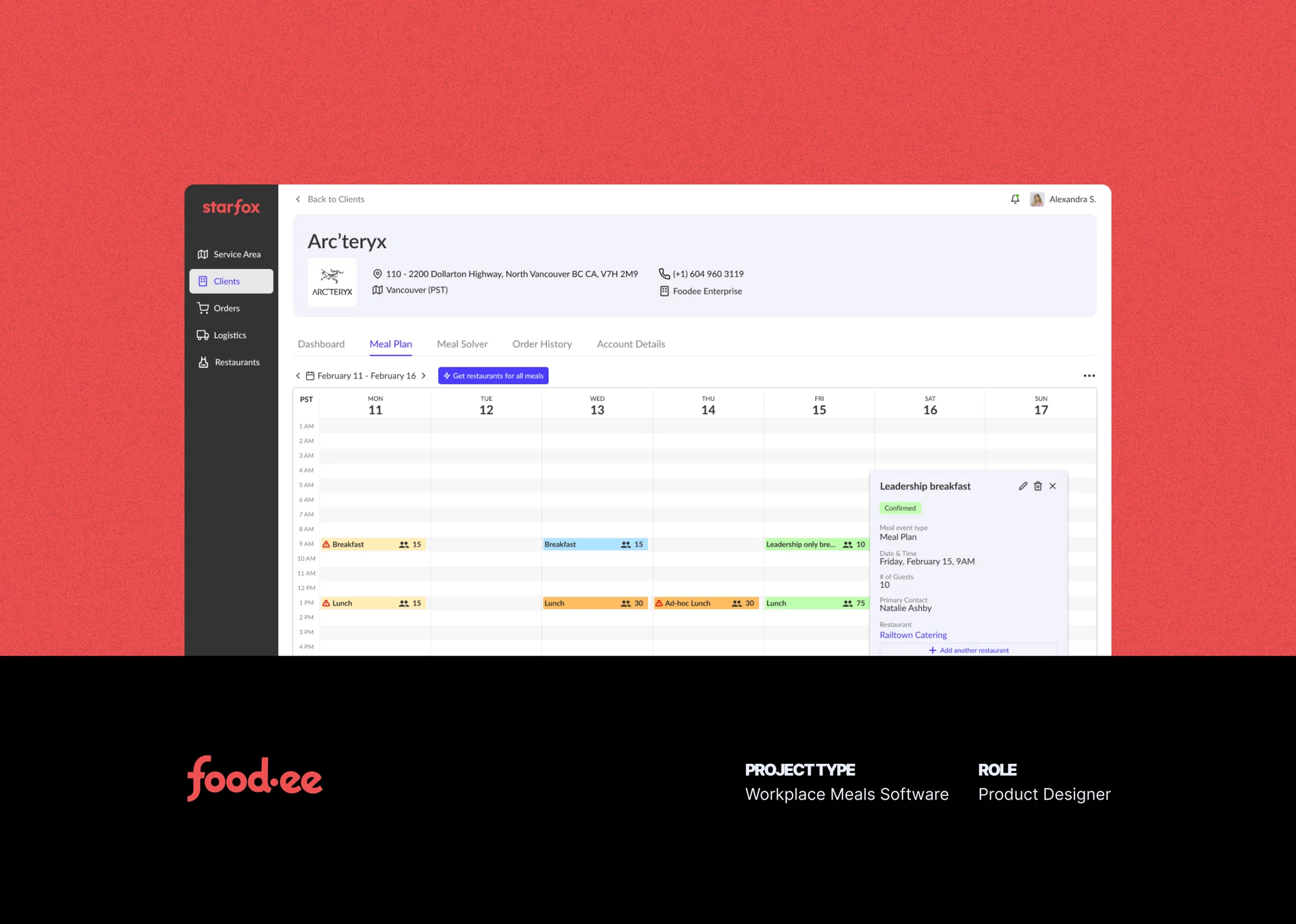
Timeframe 3 months, 2024
- The problem
- Customer Success lacked a robust enough tool for meal planning. The original method was clunky, unpredictable, and filled with workarounds and information that didn't help them do their job.
- My role
- Product designer. I designed the meal plan calendar, restaurant search and an early settings page for the Meal Solver AI.
- The team
- A senior designer, a product manager and 2 engineers (1 back-end, 1 front-end)
- The outcome
- The restaurant search and results sidebar was built before Foodee shut down, so the meal plan calendar and Meal Solver settings stayed as designs.
What the research revealed
Research was done internally with subject matter experts from Customer Success. They walked me through their pain points, and which parts of the tool they thought could become customer-facing in the future.
Most of the pain points came back to restaurant search. The Meal Solver wasn't doing a good enough job of finding matches and was too finicky to get right, so Customer Success was often finding restaurants by hand.
Key insight
Workplaces valued predictability over variety.
Getting workplaces to try new restaurants was something Foodee had worked hard on. A lot of effort went into adding new restaurants and eateries, and it did bring in new customers and more value to the app. Day to day, though, the picture was different. Most workplaces planned around 2 usual restaurants, 1 or 2 rotating ones they'd had good experiences with, and maybe 1 or 2 new ones to try.
So search worked less as a way to discover new restaurants, and more as a quick way to get to the ones Customer Success knew a customer would appreciate: for familiarity, consistency, food that packed well, delivery instructions handled properly and on-time delivery.
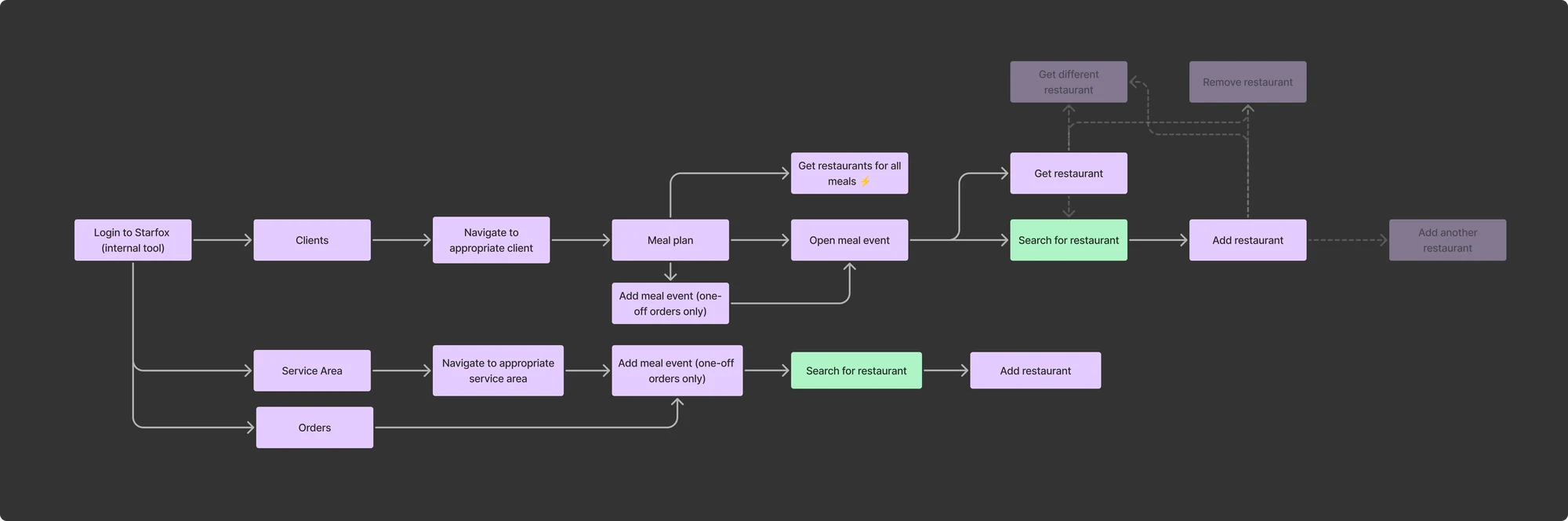
I created a high-level workflow outlining both scheduled meal plan and ad-hoc meal events and where the restaurant search would live as well as some basic auxiliary workflows (e.g. adding another restaurant, switching restaurants).
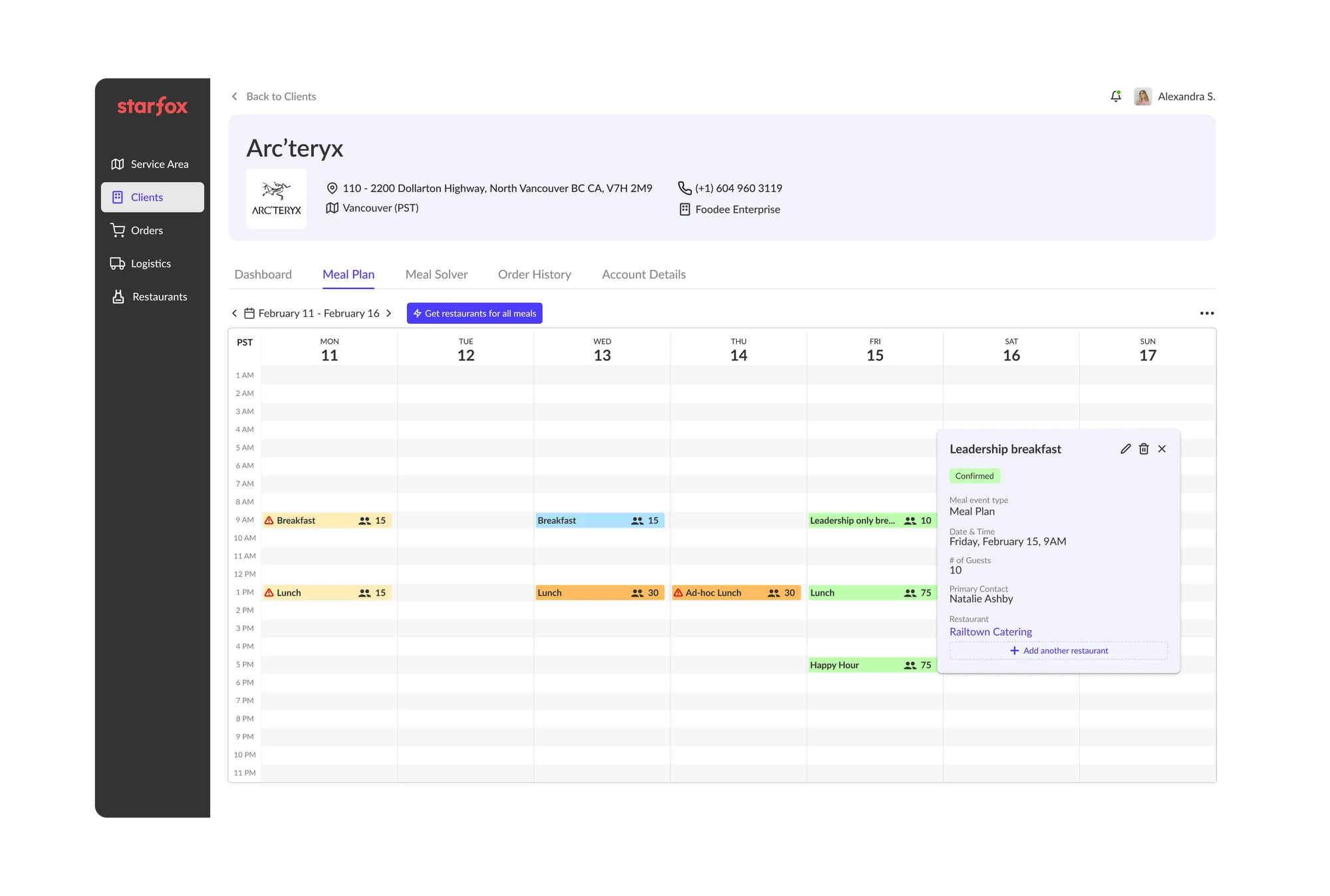
The concept for this design is to leverage familiarity with calendar functions. The meal cards keep meal event actions and details localized while the calendar provides a higher level picture of the meal plan and any meal events.

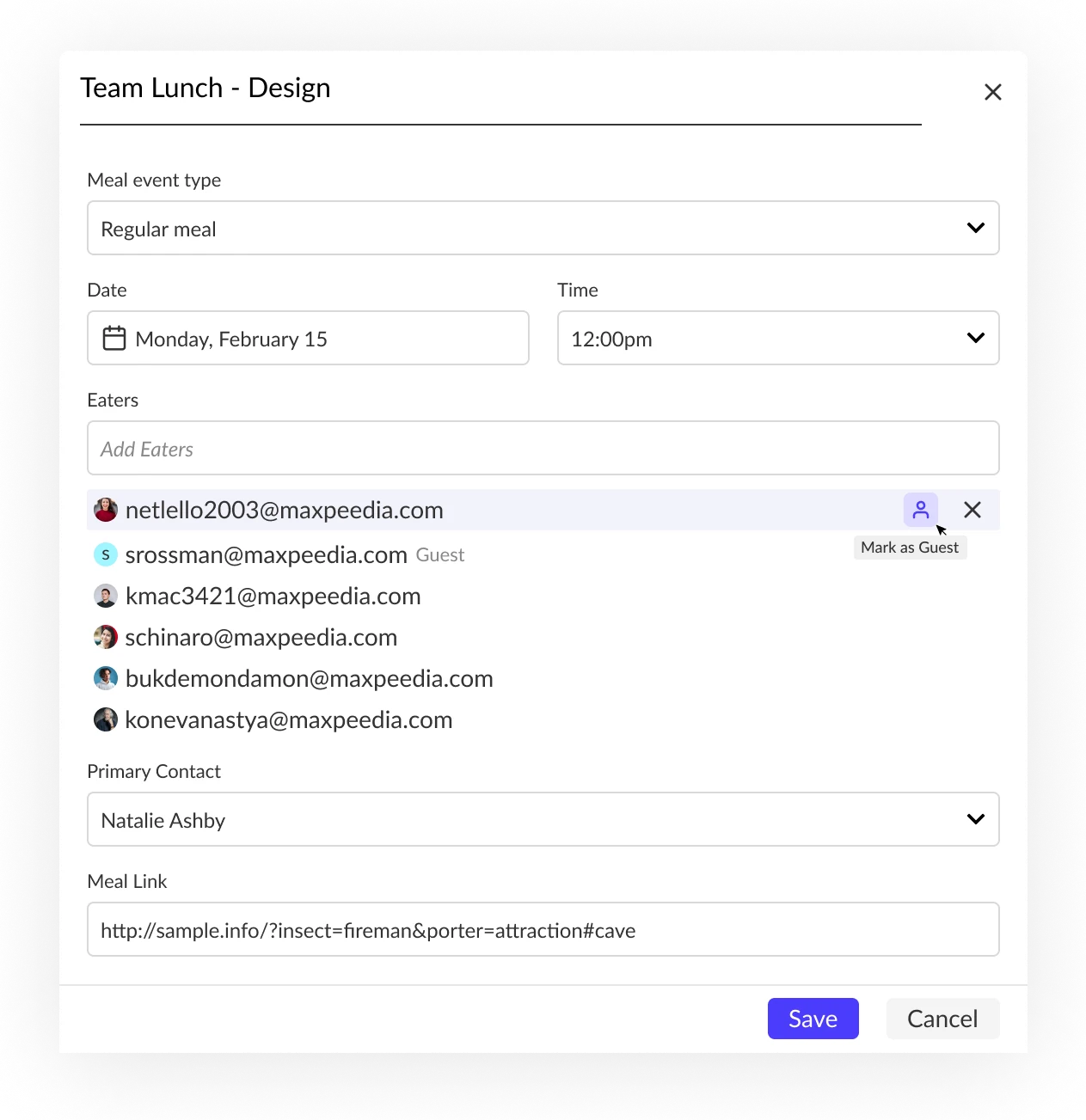
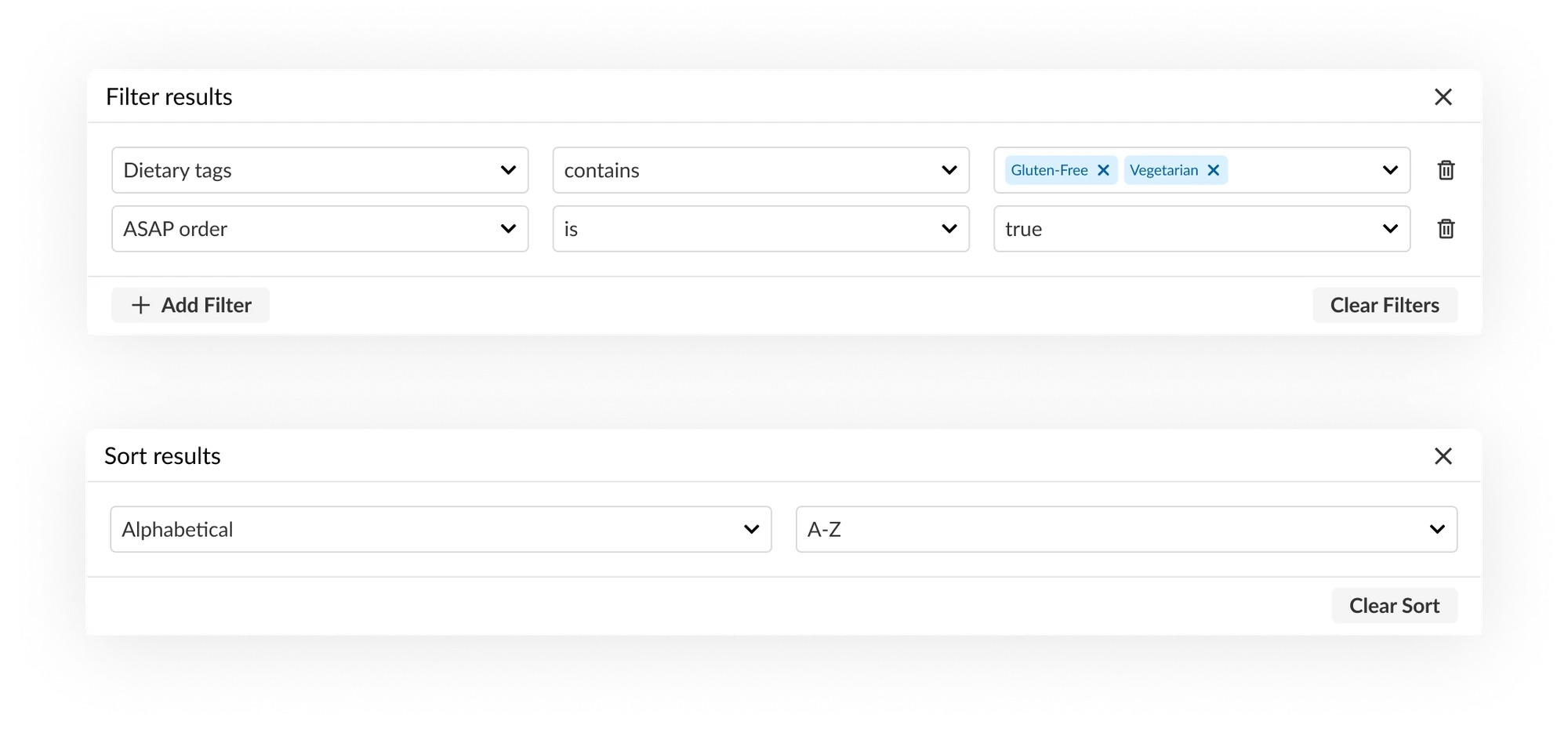
A main function that needed attention was the Restaurant Search. It is mainly used if you want to manually find a restaurant when Foodee Intelligence, aka Meal Solver, doesn't provide a suitable match.
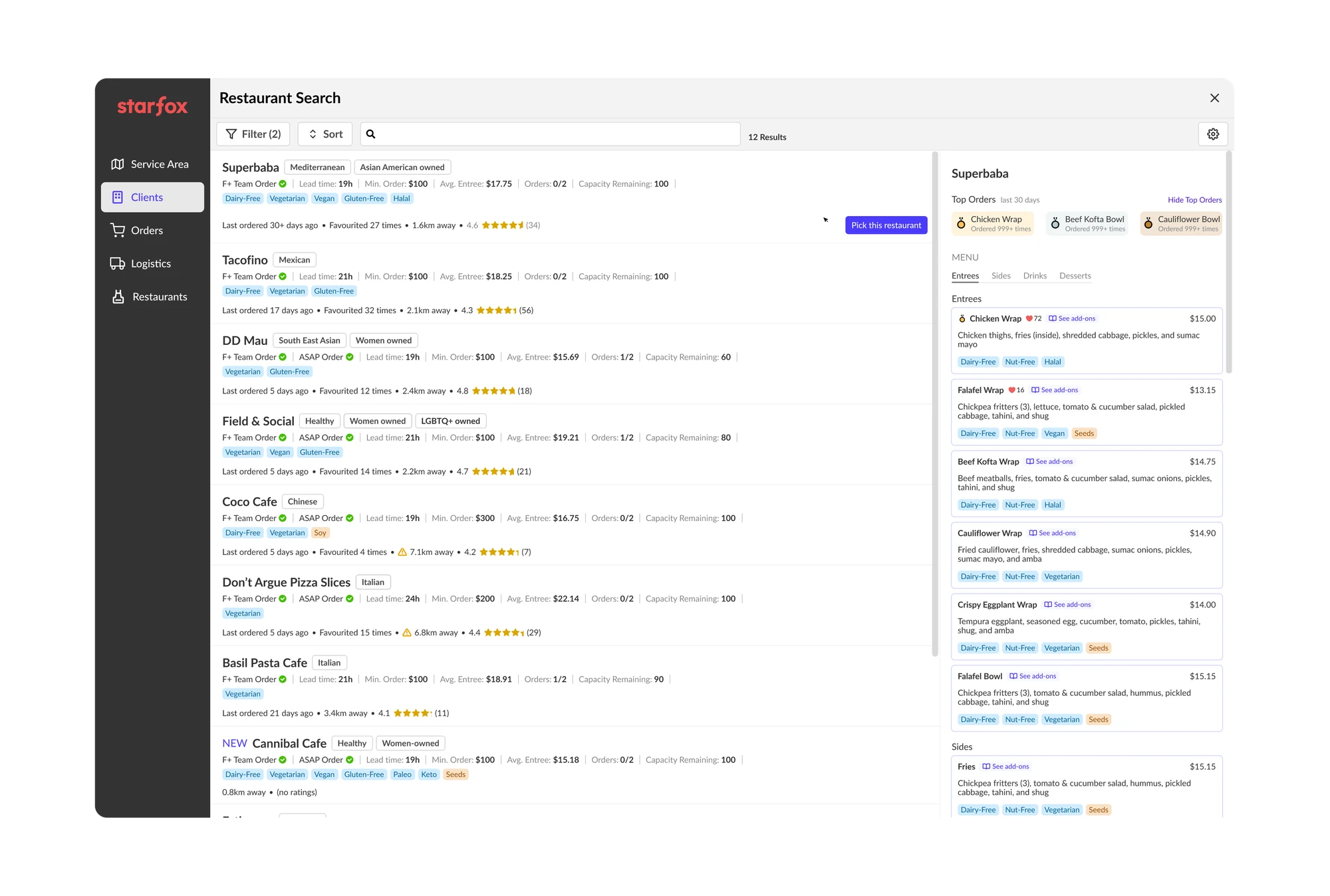
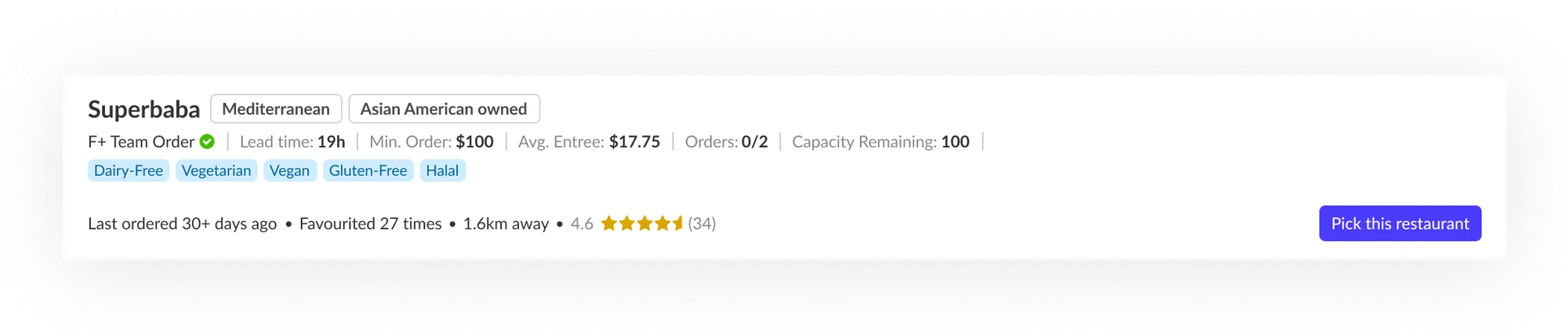
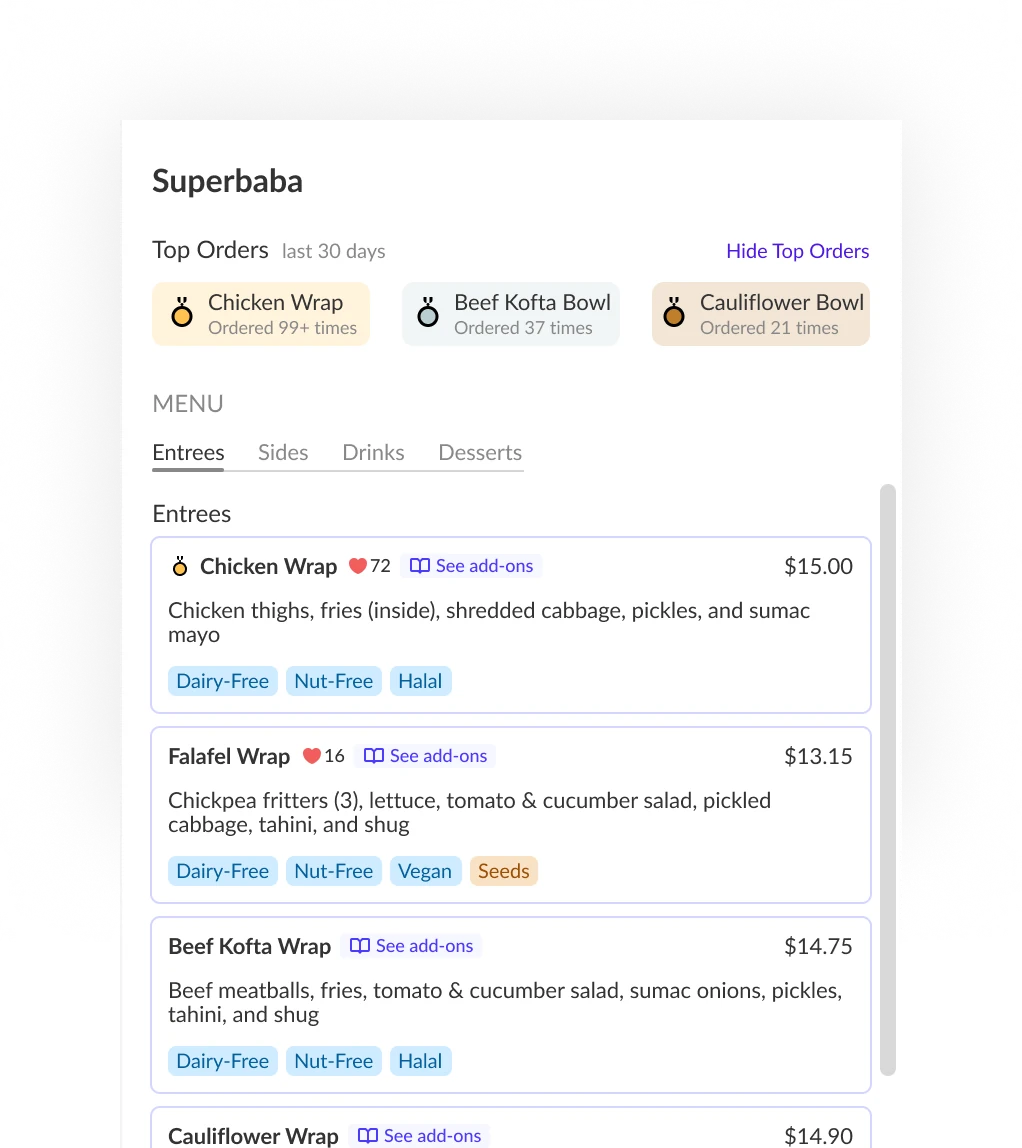
The primary challenge with the search result was how to organize and display all the information needed so that Customer Success could make the best decision possible. Details like when a restaurant was last ordered, how often it's been favourited and its top orders make the familiar favourites quick to spot. A menu gives admins even more control to see what items are offered by a restaurant to make sure there is a suitable amount and variety of offerings for eaters.
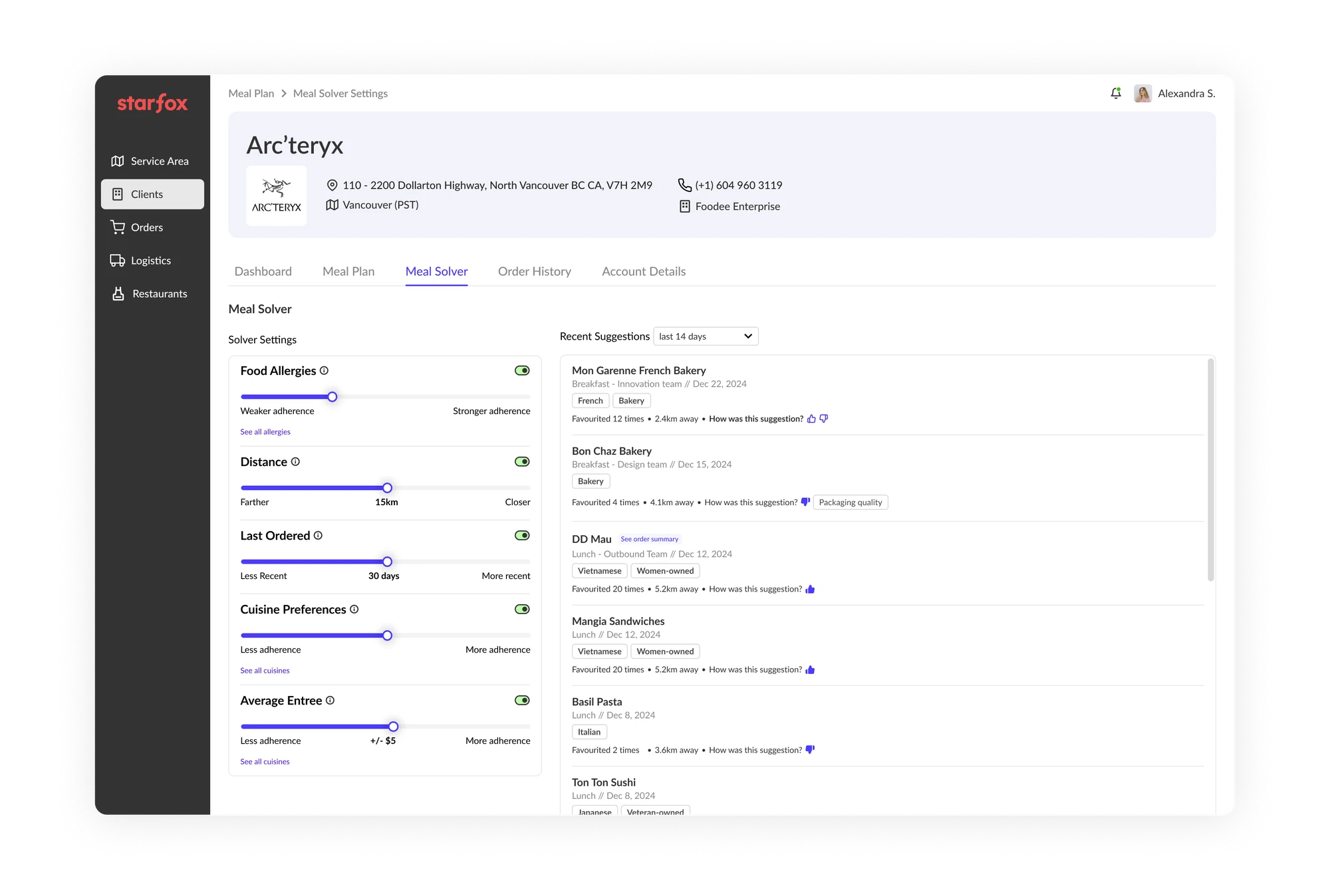
I also had the privilege of some time to explore ahead and design a settings page for Foodee's AI, called the Meal Solver. This was a fun exercise to explore AI controls that would be intuitive for Foodee's clients.
Where it was headed:
- A more robust Meal Solver with better matches (plan a full week of meals, more parameters)
- Meal Plans associated to specific locations rather than just a client
- Improved meal sharing experience when inviting guests, increased safety rails and permissions
- Usage and success analysis tracking
- Fine tuning copy for customer facing use and testing